Swimming across the Baltic Sea
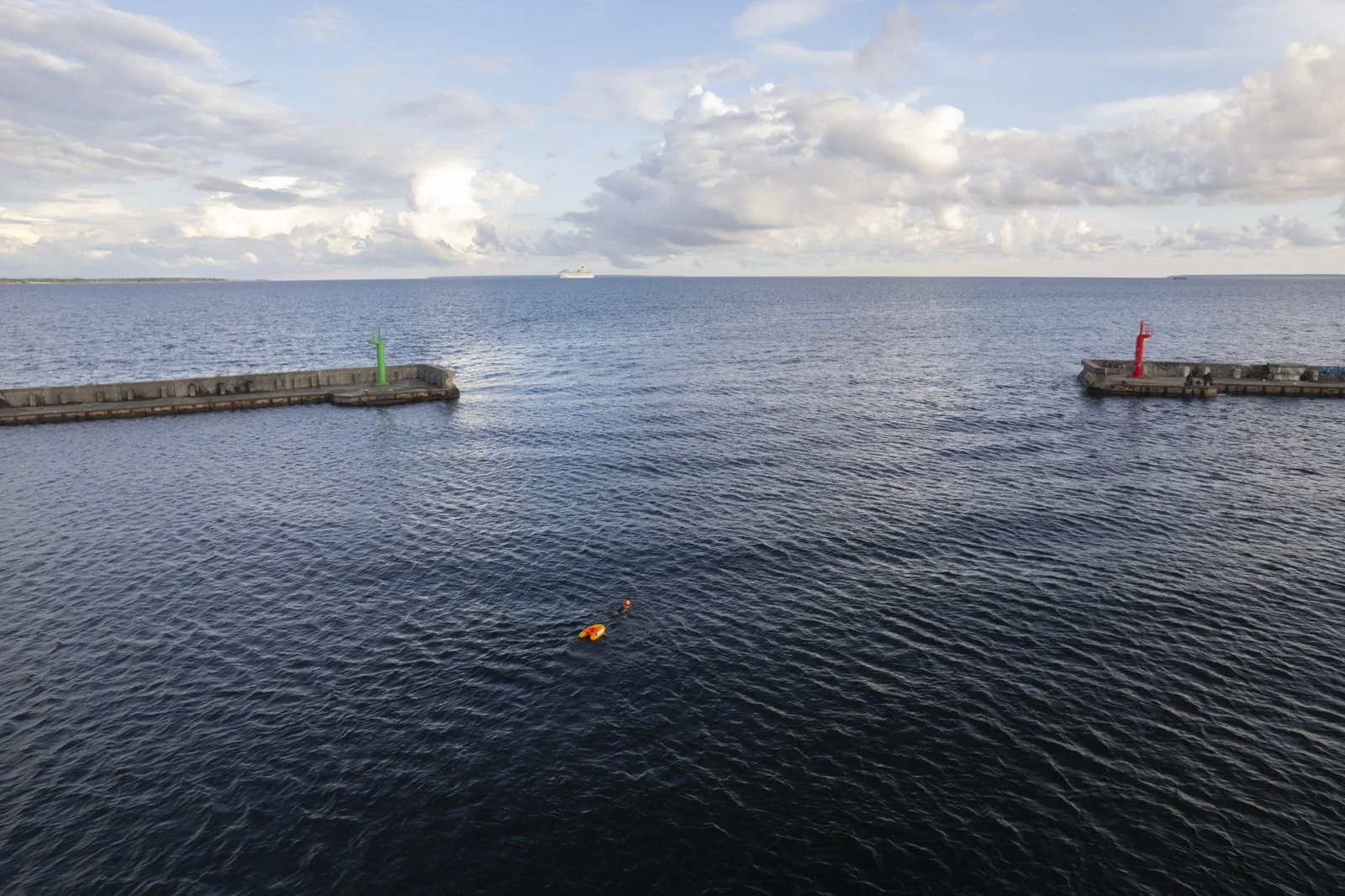
Heading out: Patrik Kvikant swimming out from Pirita harbour in Tallinn, Estonia
In 2023 I documented Finnish open water swimmer Patrik Kvikant’s succesfull endeavor to Swim across the Baltic Sea (the Gulf of Finland, to be exact) from Tallinn, Estonia to Helsinki, Finland.
The 3-day trip provided many practical and artistic challenges for me as a photographer and some thrilling moments onboard the old and small fishing boat acting as a mothership for the voyage.
How do you prepare for a 3-day photoshoot out at the sea? Obviously, preparedness is the key. I tried and mostly succeeded in these preparations, but definitely acquired learnings, some of them the hard way.
Some takeaways to follow…
Power: To be able to document a voyage like this from the start to finish having full batteries at all times is a must.
Obviously multiple batteries for all cameras you´re using is a must. In addition to that I brought a 500+ wh power source.
The boat we used did not have charging capacity, so the external power bank had to be enough.
Multiple cameras: When your subject is a person swimming in vast, open sea just shooting photos from the deck of a boat will most likely not cut it.
Being few meters above the target is not the most interesting angle. Also, when a person is swimming a head and one arm are what you´re seeing for most of the time. To this mission I brought a drone, a GoPro (with a floating handle) and a regular camera with telephoto and wide angle lenses.
While camera allowed taking “behind the scenes” and promotional shots on the deck, drone provided the “big picture” from the air and GoPro allowed getting right on the surface. (A GoPro can also be handed over to the subject himself and photos can be remotely shot from the deck.)
Thinking through and learning drone operations from the boat’s deck is a must: I prepared for it, but still had to learn the hard way.
My first and so far only drone loss occured on this trip. At the end of the voyage I started from the deck, but forgot to ask the skipper to stop the boat for the second. I had also started the drone several minutes before while beginning to position myself for the launch.
I launched the drone from my hand - which normally is not a problem. My drone ended up shooting directly to the waves in a shallow angle. I find it likely that it tried to go to the home point - which was set to the point where the boat was when I powered up the drone. Far behind the boat.
Based on these learnings I made sure to remember these guidelines for flying drones out of boats:
Launch stationary whenever possible. Don’t let the home point fall too much behind when launching.
You need someone to catch the drone when landing: even slight swell will make the boat rise and descend rapidly. When you´re flying a drone you will need both hands at controls and good timing. The other person will catch it. (Thick gloves recommended just in case.)
Conserve battery: you won’t have infinite attempts at lading.
Plan food & sleep: In case you´re not used to being at sea in a small boat for multiple days (like I wasn’t) I’m stating the obvious. To be able to function and do your job, you need food and sleep. Figure what kind of facilities the mothership has and bring lightweight food and warm clothes /sleeping bag. In the Baltic summer this could be overlooked during the daytime, but nights at the sea are chilly. I prepared to it and managed to sleep quite compfortably on the deck.
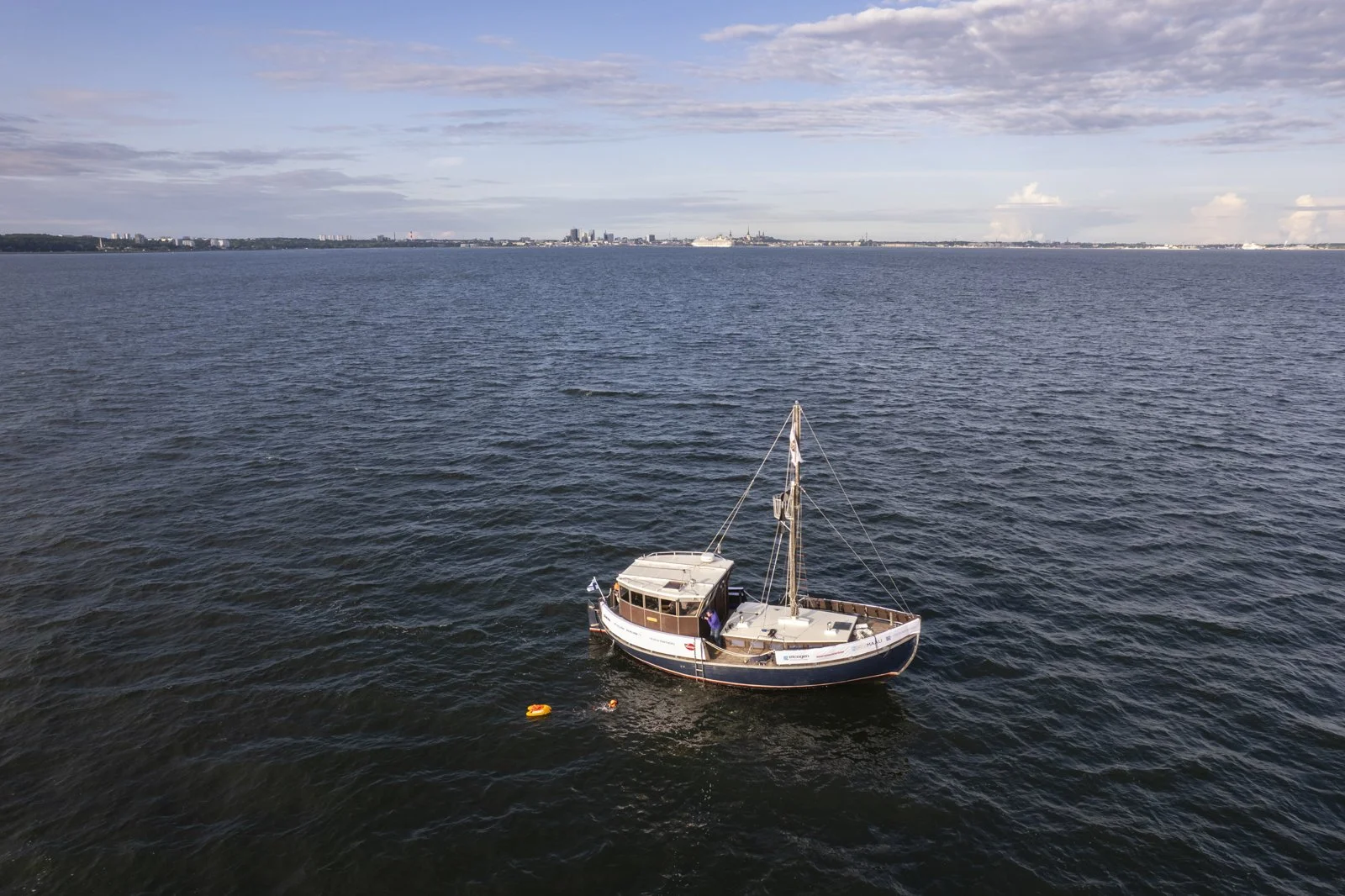
The mothership: old and quite small fishing boat served as the home base during the 3 day voyage.
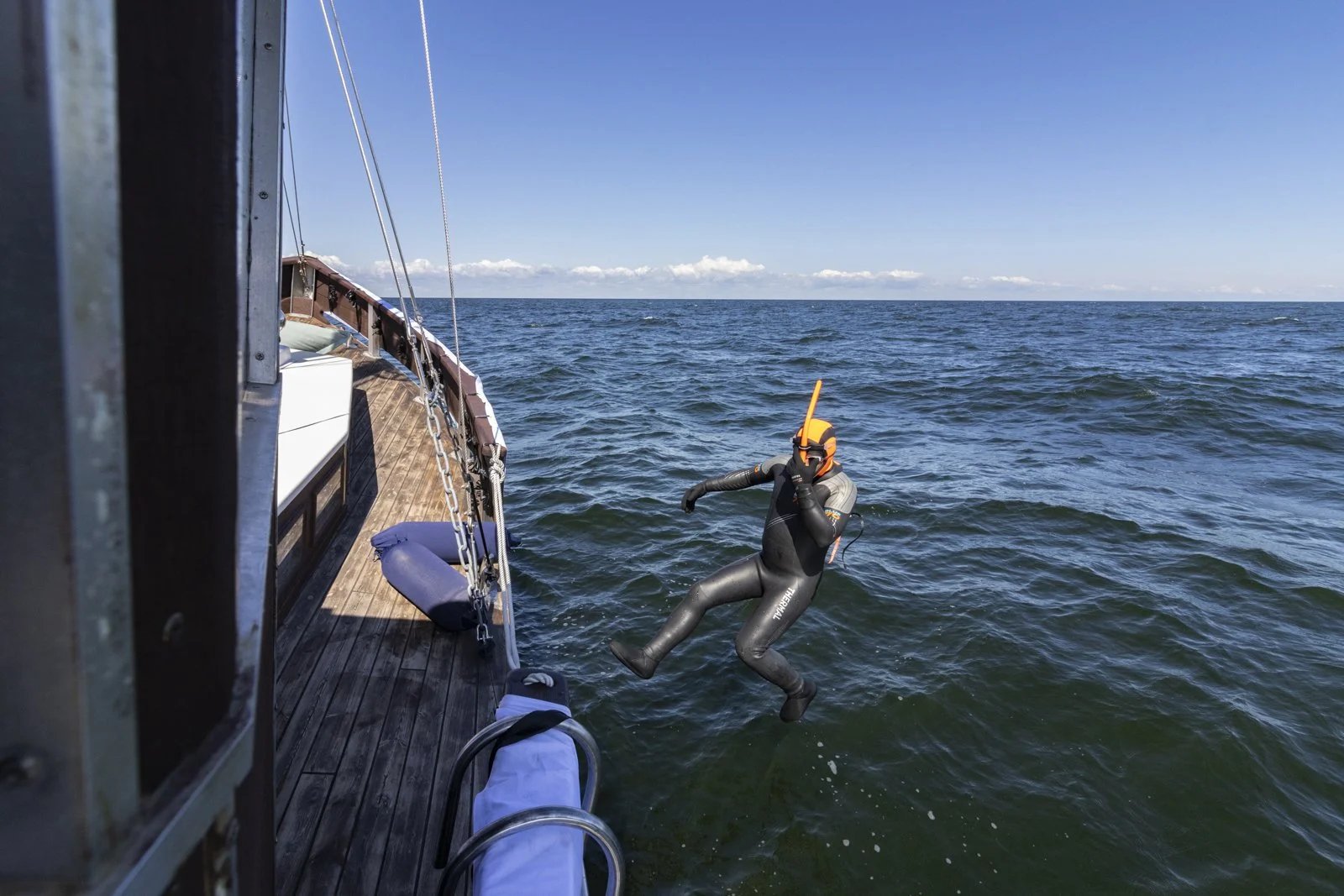
Dropping in: every meal break ended with a jump back in to the sea.
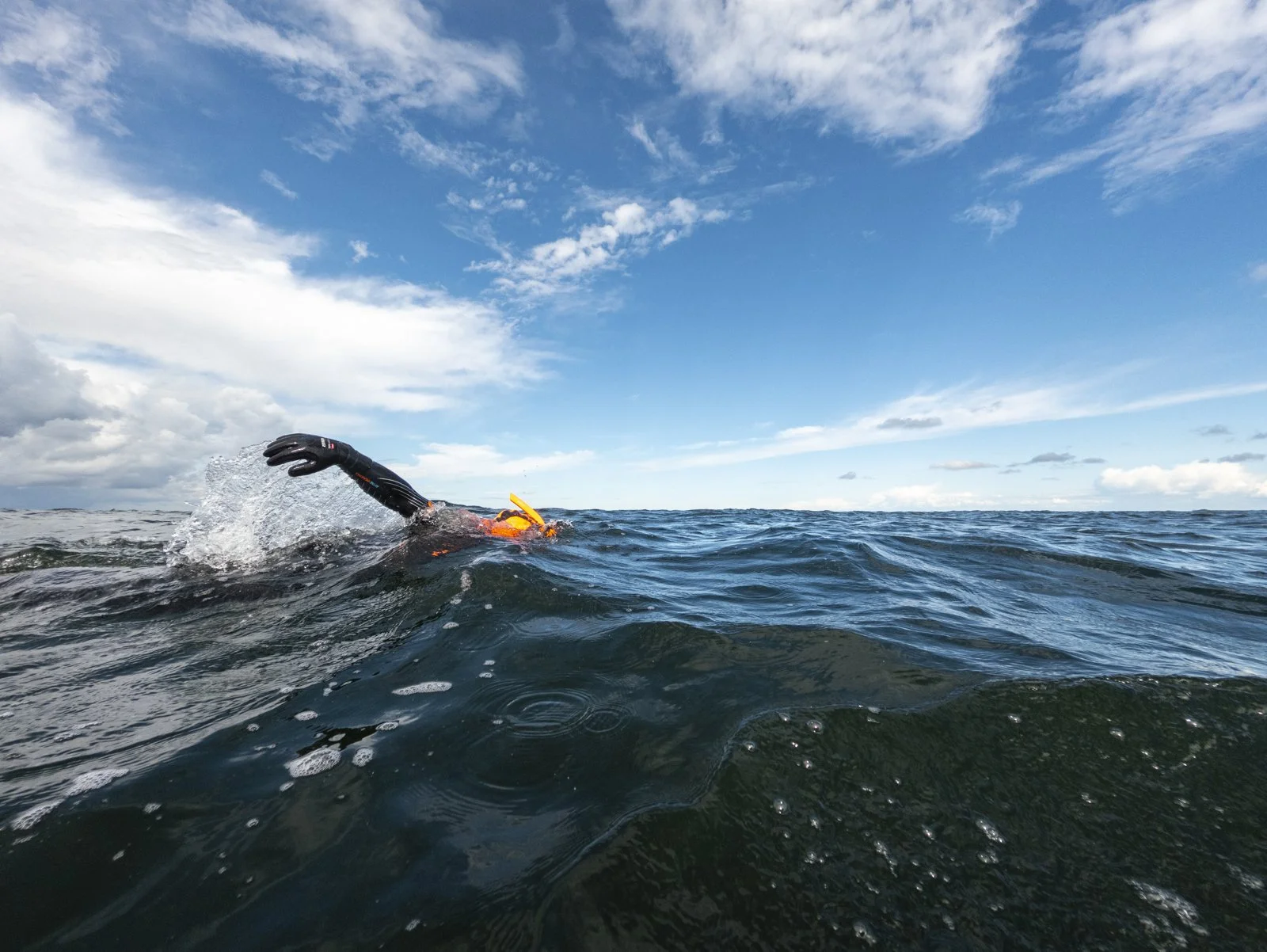
Open sea is a lonely environment.
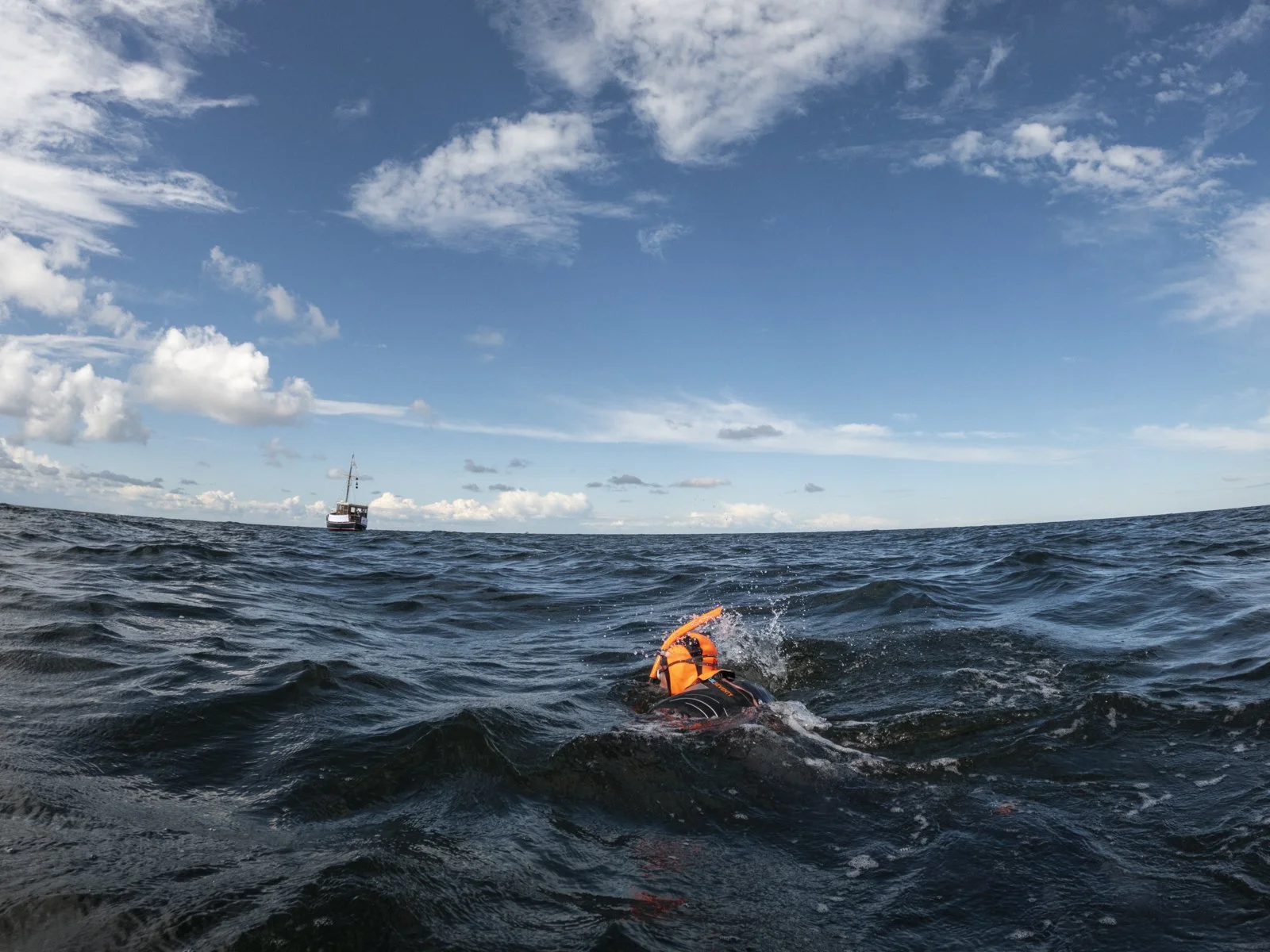
A GoPro allowed getting right to the surface. This photo was shot from the accompanying speedboat.
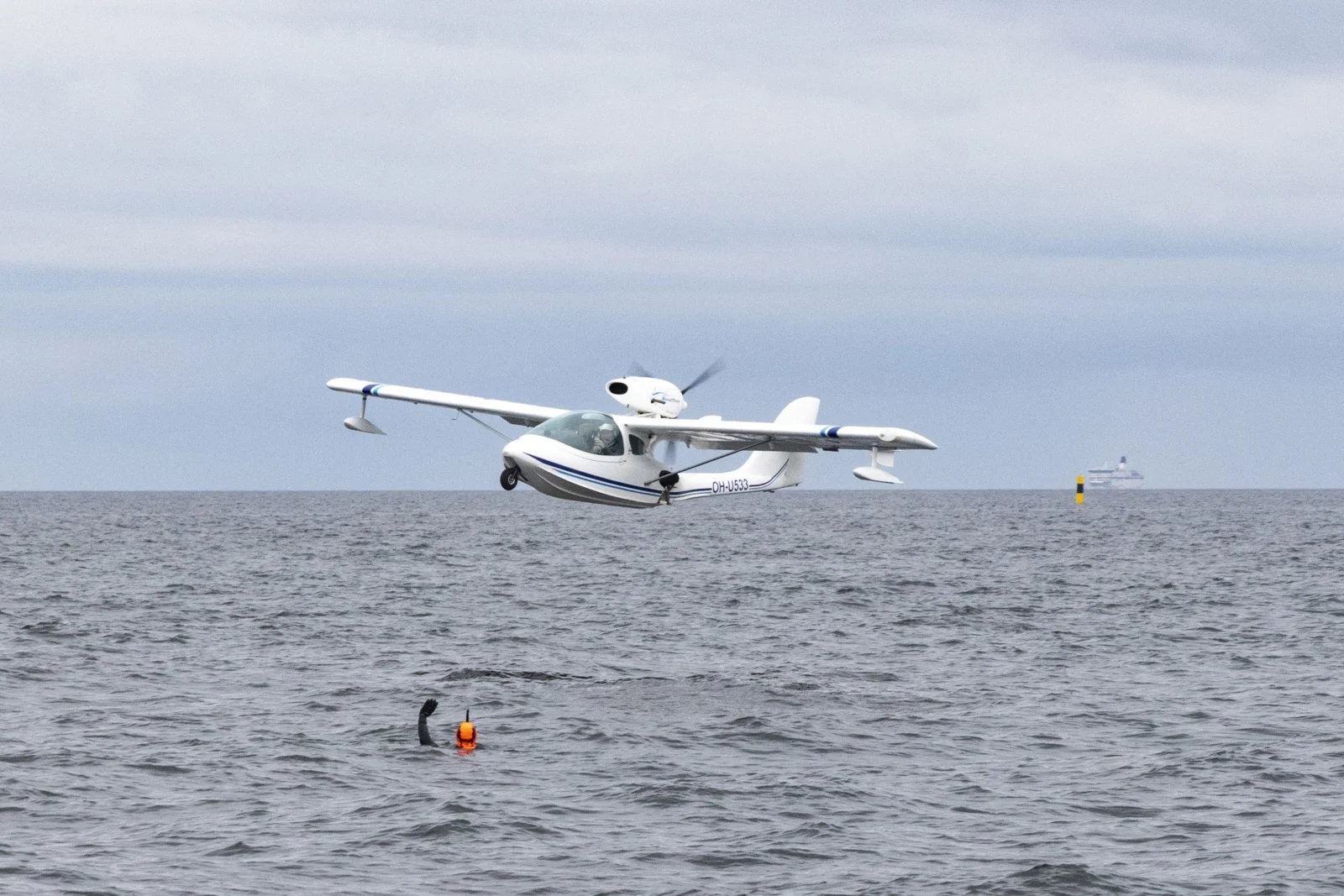
A flying stunt: attention of the passengers on passing ferries was drawn by organizing a fly-by of a small seaplane.
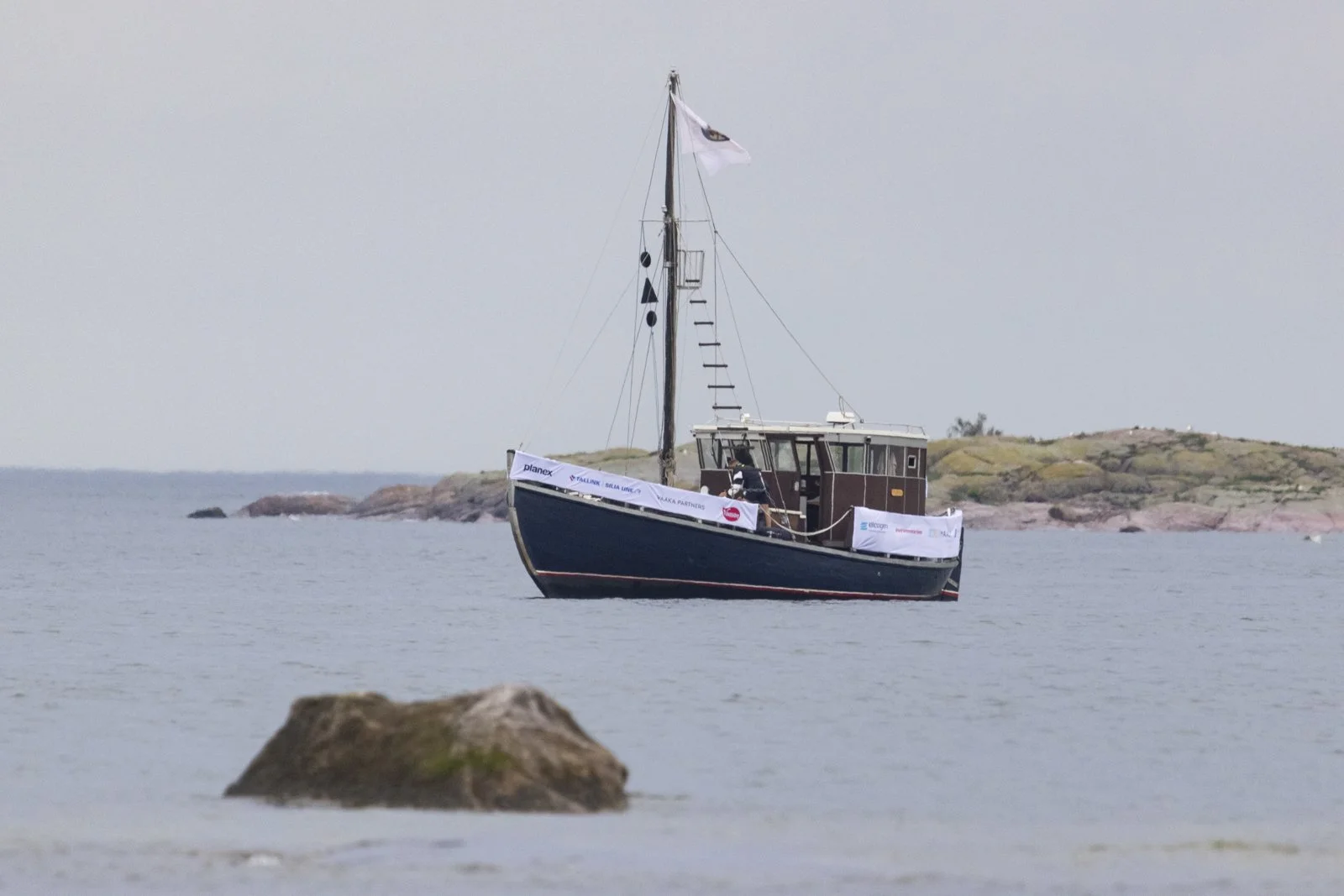
Land in sight: the mothership in Helsinki archipelago.
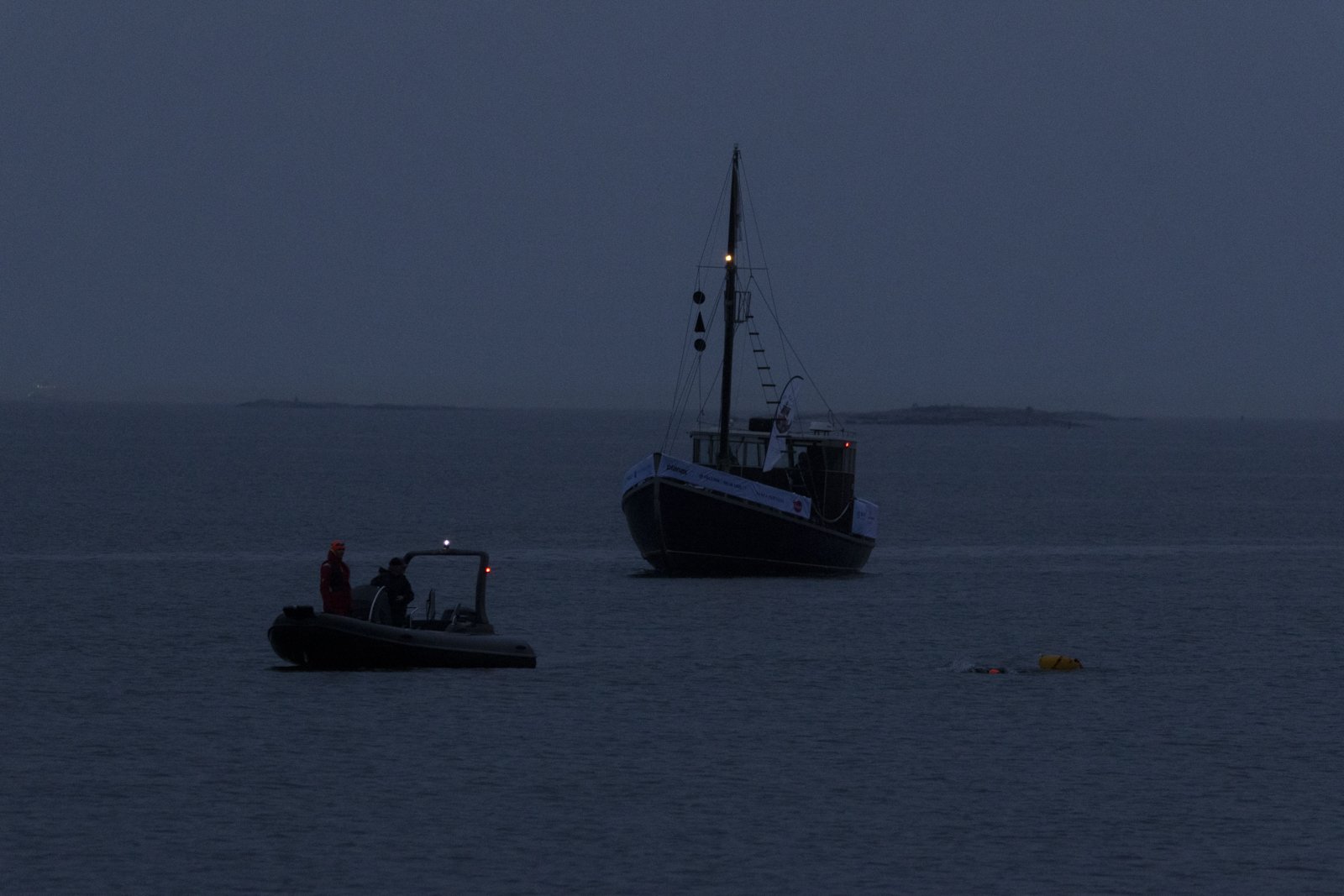
Getting there: just few minutes to go until landfall in Helsinki.
